Planning
Driving Between Paradores: Mountain Passes, Historic Centers & Parking
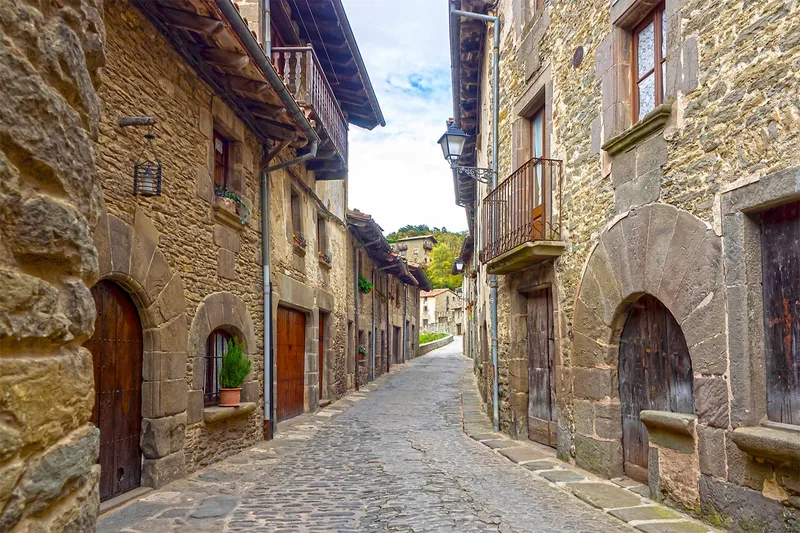
Driving between Paradores means medieval lanes, mountain passes, low-emission zones and scarce parking.
Here are the practical rules for arriving calmly, charging an EV and avoiding fines.
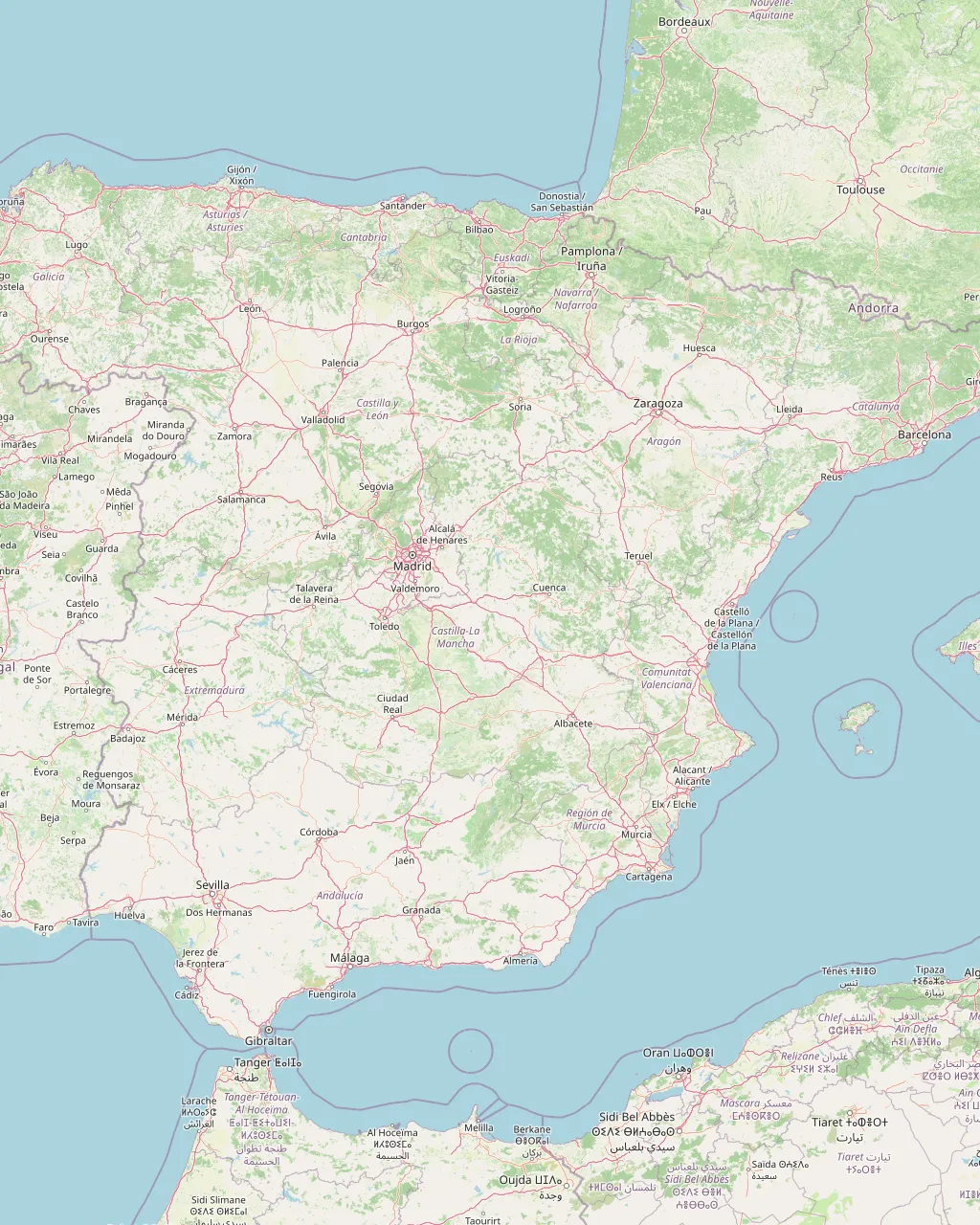
Parador Driving & Parking Map
Parking access, ZBE requirements, and EV chargers at iconic Paradores
Parador de Toledo
Easy Access & Free Parking
Perched on Cerro del Emperador facing Toledo across the Tagus River. Features a large, accessible outdoor parking lot without medieval street driving.
- Parking Fee
- Free open-air lot
- EV Charging
- Available (Iberdrola Type 2)
- Access
- Wide suburban road (Cerro del Emperador)
Ничего не найдено — выберите другую категорию.
Картографические данные: © OpenStreetMap contributors
Contents
Renting a car and setting off across the Iberian Peninsula is undoubtedly the most liberating way to experience Spain’s network of state-run historic hotels. Yet for many travelers from North America, the UK, or Australia, the prospect of piloting a rental car through a labyrinth of 9th-century fortress ramparts, sheer mountain switchbacks, and camera-enforced urban zones brings on a wave of cold sweat.
The reality is reassuring: Spain boasts one of the most advanced, smoothly paved motorway networks in the European Union. The vast majority of your highway driving will be effortless. The true adventure—and the occasional white-knuckle moment—tends to occur in the final 500 meters of your journey, right as you approach the drawbridge, cloister gate, or cliffside perch of your chosen castle. With the right vehicle choice, a clear understanding of urban access regulations, and a few insider strategies, you can transition smoothly from open highway cruising to stress-free check-ins on your curated road trips across Spain.
Choosing Your Rental: The Compact Car Advantage
When selecting a rental car for a Parador itinerary, set aside any urge to upgrade to a large SUV, executive sedan, or wide minivan. While a bulky vehicle might feel plush on the multi-lane autovías of Castile, it will transform into a stressful liability the moment you attempt to turn into an arched alleyway in Arcos de la Frontera, Hondarribia, or Toledo.
Medieval streets were engineered for pack mules, horses, and armored carts, not modern two-meter-wide crossover vehicles. Stone stone curbs, protruding corner stones (known in Spain as guardacantones), and hanging iron balconies leave virtually zero margin for error. Furthermore, many historic Paradores that feature on-site underground garages—such as the Parador de Ronda—rely on car lifts or spiral ramps built decades ago with tight turning radii.
For the best balance of comfort, highway stability, and nimble urban maneuverability, follow these vehicle selection guidelines:
- Vehicle Class: Opt for a B-Segment (subcompact like a Seat Ibiza, Volkswagen Polo, or Renault Clio) or C-Segment (compact hatchback like a Seat León, Volkswagen Golf, or Toyota Corolla). These vehicles give you sufficient trunk capacity for two large suitcases while keeping overall width under 1.8 meters.
- Transmission: Automatics are increasingly common in Spanish rental fleets, but manual gearboxes remain standard in base tiers. If you are not completely confident with hill-starts on a 15% cobbled incline, pay the modest surcharge for an automatic.
- Retractable Mirrors: Ensure you know where the power-fold button is for the wing mirrors. You will routinely fold your side mirrors when easing through fortified town gates or parking slots.
- Full Insurance Coverage: Choose zero-excess deductible coverage directly from the rental provider. Wheel rim scuffs from ancient curbs and brush against low-hanging stone walls are the most frequent minor mishaps reported by travelers.
Decoding ZBE Low Emission Zones and Access Cameras
One of the largest sources of confusion for foreign visitors is the nationwide rollout of zbe low emission zones spain (Zonas de Bajas Emisiones). Under Spanish climate legislation, all municipalities with more than 50,000 residents must enforce restricted environmental areas to lower vehicle emissions.
Access into a ZBE is regulated by automated license plate recognition (ALPR) cameras. Spanish vehicles display a color-coded environmental sticker issued by the DGT (Dirección General de Tráfico): 0 (Zero emissions), ECO, C (green), or B (yellow). Rental cars registered in Spain usually carry these badges on the windshield, or their details are digitally recorded in the DGT registry.

However, many historic Paradores reside inside pedestrianized cores (Áreas de Prioridad Residencial or APR) or historic ZBE districts where even eco-certified rental cars are barred unless they are registered on the municipal guest whitelist. Entering without guest authorization results in an automated municipal fine, typically €200 (discounted to €100 if paid within 20 days).
To navigate these zones without receiving an unexpected fine after returning home, memorize this protocol:
- Notify the Parador in Advance: When your reservation is confirmed, check whether the Parador sits within a restricted vehicle access zone.
- Drive Directly to the Hotel: You are legally permitted to cross access cameras to reach your hotel, provided the property submits your license plate to local authorities within the permitted window (usually 24 to 48 hours from arrival).
- Hand Over Your Plate at Check-In: As soon as you step up to reception, state clearly: "Vengo en coche de alquiler, ¿pueden registrar mi matrícula para la zona de tráfico restringido?" Hand the desk agent your car rental agreement or a photograph of the rear license plate (matrícula). Staff will log it into the municipal traffic portal.
- Keep Proof of Stay: Retain your hotel invoice and receipt for at least six months. If a municipal fine slips through administrative cracks and reaches your rental agency, your Parador invoice serves as irrefutable proof that you had lawful access on that specific date and time.
Historic Town Driving: Overcoming Medieval Alleys and GPS Pitfalls
Mastering historic town driving spain requires turning off blind reliance on standard smartphone navigation apps. Google Maps, Waze, and Apple Maps often fail to recognize that a narrow street may be officially open to traffic, yet practically impassable for a passenger vehicle due to protruding doorstep stone steps, outdoor restaurant seating, or a sudden 90-degree bend between masonry walls.
At the mountain fortress of the Parador de Jaén atop Santa Catalina Castle, for instance, GPS units sometimes attempt to route cars up sheer pedestrian stairways on the northern slope rather than directing drivers to the proper, wide southern approach road (Carretera al Castillo). Similarly, entering the grounds of the Parador de Granada inside the Alhambra requires entering via the southern ring road (Ronda Sur / A-395), through the Camino Viejo del Cementerio, rather than attempting to cut across the historic Albayzín or through the restricted Puerta de las Granadas.
To prevent getting wedged in an impossible alley, observe these ground rules:
- Read Hotel Arrival Instructions: Most historic Paradores send an automated pre-arrival email with exact driving coordinates and specified approach routes. Read these carefully before you turn on your ignition.
- Follow Brown Heritage Signage: Municipalities install distinct brown or maroon road signs pointing towards the Parador from every major arterial entrance. When your GPS instructions conflict with a physical street sign pointing to "Parador", trust the physical sign.
- Stop and Walk When in Doubt: If an alley narrows to the point where you feel uncertain, pull up against a wider curb, turn on your hazard lights, and walk 50 meters ahead to inspect the turn. Backing out of an alley in reverse for 200 meters is an ordeal best avoided.
- Mind the Mirrors and Sensors: Protruding iron window grilles (rejas) are positioned right at window height in Andalusia and Castile. Parking sensors may chime continuously in tight lanes; rely on visual checks rather than acoustic beeps when easing past stone gateposts.
Parador Parking Fees, Garages, and Amigos Perks
Parking logistics vary significantly across the network depending on whether the property is a converted rural monastery with expansive grounds or a medieval palace embedded in a walled city.
Understanding standard parador parking fees allows you to budget realistically:
| Parador Location Type | Typical Daily Rate | Parking Arrangement | Access Notes |
|---|---|---|---|
| Rural & Mountain (e.g., Cazorla, Gredos, Bielsa) | Free | Open surface lot on hotel grounds | Ample spaces, unpaved or asphalt, easy access |
| Hilltop Fortresses (e.g., Cardona, Jaén) | Free to €12 | Enclosed courtyard or dedicated outdoor spaces | Winding uphill approach, barrier-controlled entry |
| Walled Historic Centers (e.g., Ávila, Cuenca, Toledo) | €15 to €22 | Private hotel surface lot or nearby garage | Strict entrance gates; Cuenca and Toledo offer simple drop-off |
| Urban & High-Density (e.g., Ronda, Santiago, Granada) | €20 to €25 | Underground garage or private secured Alhambra grounds | Tight ramp maneuvers; advance booking recommended |
Guests enrolled in the Amigos de Paradores loyalty program should pay close attention to parking privileges. While entry-level Amigo cardholders pay the standard parking tariff, elite tiers (Amigo Oro and Amigo Círculo) enjoy complimentary or discounted garage spaces depending on availability at urban properties. It is always wise to inform the hotel at the time of reservation if you require a covered garage space, particularly in peak travel seasons like May, September, and October.
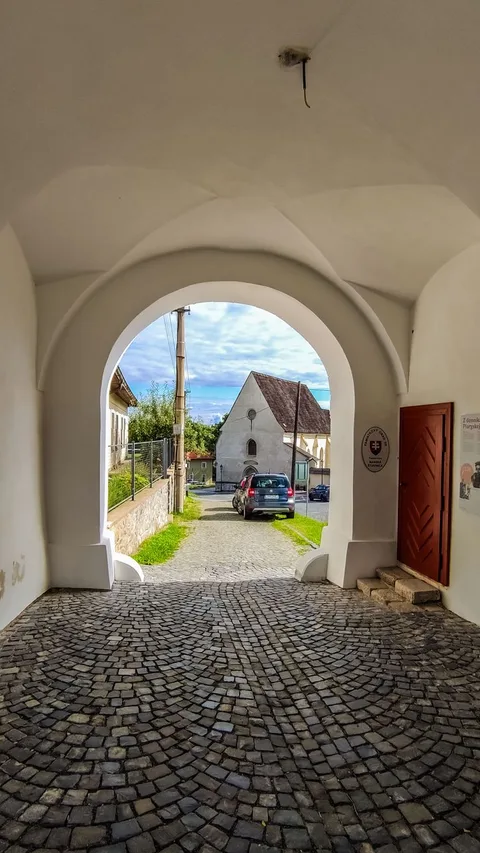
EV Charging Across the Parador Network
Spain has accelerated its national charging infrastructure, and Paradores is at the forefront of sustainable travel through its long-standing partnership with Iberdrola. Today, travelers can access reliable ev charging paradores at more than 75 properties across the country.
If you choose a plug-in hybrid (PHEV) or pure battery electric vehicle (BEV) for your Parador itinerary, here is what you need to know:
- Charging Speed and Hardware: Parador charging stalls predominantly feature semi-fast AC chargers (Type 2 Mennekes sockets) operating between 7.4 kW and 22 kW. These are engineered for overnight charging, restoring 100% battery capacity while you dine and sleep. Selected resort properties (such as El Saler near Valencia) also host high-power DC fast-charging units.
- Payment and Activation: Chargers are integrated into the Iberdrola Recarga Pública network. While some locations allow roaming access via popular apps like Electromaps, Chargemap, or Miio, downloading the official Iberdrola app and registering a credit card prior to arrival ensures seamless operation.
- Pricing: AC charging across Parador bays typically runs between €0.35 and €0.45 per kWh. Some rural Paradores offer parking complimentary while charging, whereas properties with paid garages require paying the standard garage day-rate alongside the electricity consumption.
- Etiquette: Because charging stalls are limited (typically two to six bays per property), move your vehicle to a standard parking bay once the battery reaches full charge so other guests can plug in.
Mountain Passes, Highways, and Speed Enforcement
Spanish highways are divided into two main categories: Autovías (labeled 'A', multi-lane divided highways, entirely toll-free) and Autopistas (labeled 'AP'). Over the past several years, Spain has abolished tolls across the vast majority of its mainland AP motorways, including long stretches of the AP-7, AP-2, and AP-1. The few remaining toll highways are concentrated around the Madrid orbital network (Radiales) and sections of the northwest (AP-9 in Galicia and AP-68 in the Basque Country/La Rioja).
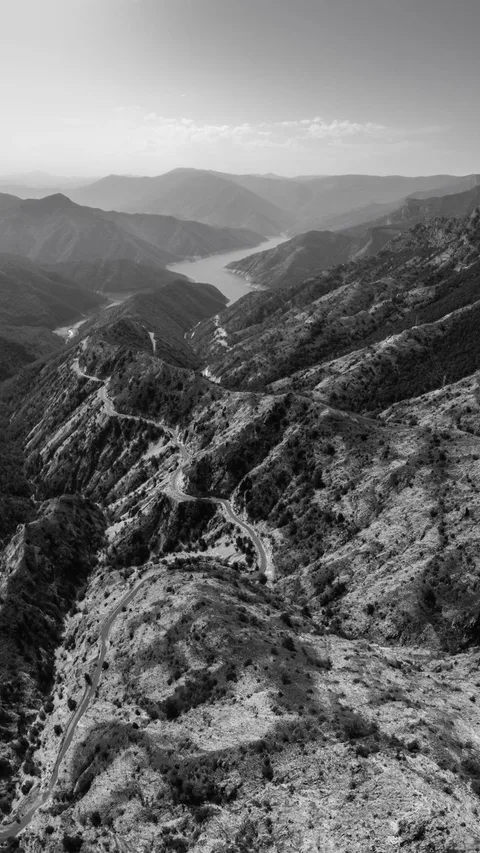
When traveling off the highway network into Spain’s mountain ranges—such as crossing the Sierra de Gredos or venturing into the Picos de Europa—these driving in spain tips will keep your trip smooth and trouble-free:
- Use Engine Braking on Descents: Long downward gradients from mountain passes can quickly overheat standard rental car brake pads. Shift your transmission into manual mode and downshift to second or third gear to utilize engine compression.
- Observe Section Speed Radars: Spain’s traffic authority (DGT) utilizes both fixed radar boxes and average speed cameras (radares de tramo). These systems calculate your average speed between two points miles apart over a highway tunnel or viaduct. Pay close attention to overhead digital signs indicating Radar de Tramo and maintain the posted limit (typically 120 km/h on autovías, 90 km/h on secondary roads).
- Mind Roundabout Priority: In Spain, traffic already inside a roundabout has strict right-of-way over entering traffic. Always use the outer lane when taking an immediate exit; never cross lanes aggressively from the inside circle directly across an exit mouth.
- Watch for Wildlife: In regions like Extremadura, Castile-La Mancha, and the Pyrenean foothills, wild boar (jabalí) and deer frequently cross secondary two-lane roads at dusk and dawn. Keep headlights on high beam when appropriate and scan road verges alertly.
Your Parador Arrival Checklist
To ensure a stress-free arrival at every fortress, convent, and palace along your route, run through this concise checklist before departing each morning:
- Morning Check: Check your navigation route against the hotel's written driving directions. Confirm whether the destination has a dedicated garage and if reservations are recommended.
- At the Town Boundary: Ignore aggressive shortcut prompts from your GPS that cut through unpaved alleys; follow official directional signs pointing to the historic monument.
- At the Gate: If an electronic bollard or barrier blocks the entrance to the Parador courtyard, press the hotel intercom buzzer (portero automático) and announce your booking name.
- At Check-In: Register your license plate immediately at the reception desk to prevent municipal traffic camera violations.
- At the Garage: In tight subterranean parking spaces, ask your passenger to step out and guide you into the bay to avoid clipping low concrete pillars or structural stonework.
Частые вопросы
Can I drive into historic city centers if my Parador is inside a restricted traffic zone?
Yes. Guests staying at a Parador located inside a ZBE or restricted resident zone (such as Granada or Cuenca) have authorized access to reach the hotel. You must provide your rental car license plate to hotel reception upon arrival so they can submit it to the municipal traffic whitelist.
How much does parking typically cost at a Parador?
Parking costs depend on the property. Rural and mountain Paradores offer free open-air parking on their grounds. Paradores located in historic town centers, fortified castles, or dense cities typically charge between €15 and €25 per 24-hour period for secured lots or underground garages.
Do all Paradores have electric vehicle (EV) charging stations?
Most Paradores—over 75 properties—are equipped with EV chargers installed in partnership with Iberdrola. These are predominantly semi-fast 7.4 kW to 22 kW Type 2 connectors for overnight charging. You can activate them using the Iberdrola Recarga Pública mobile app.
What size rental car is best for a Parador road trip across Spain?
A compact hatchback (such as a Seat León, VW Golf, or Ford Focus) is ideal. It provides sufficient luggage space for two to three passengers while remaining narrow enough to maneuver safely through medieval stone arches, narrow alleys, and tight garage lifts.