Paradores
Parador de Cuenca: Monastic Splendor Facing the Hanging Houses
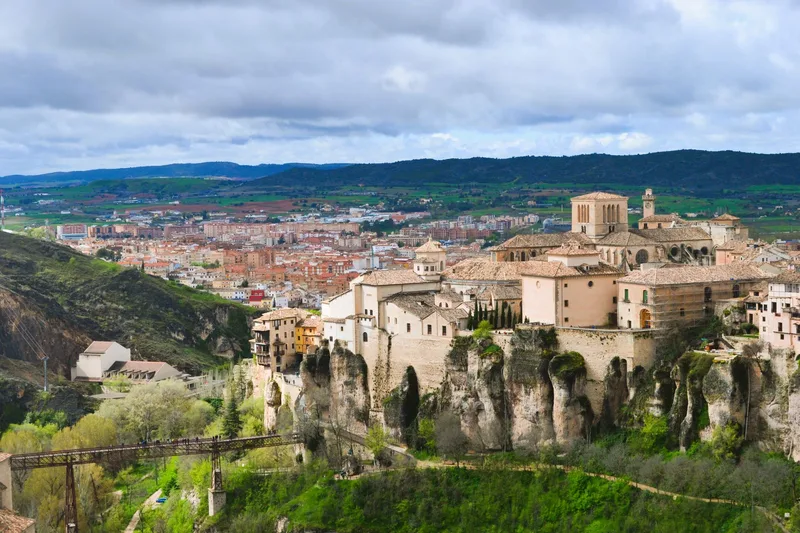
The Parador de Cuenca occupies the Convento de San Pablo, directly across the gorge from the Hanging Houses.
Find out which rooms frame that view and how to walk the San Pablo bridge into the old town.
Contents
Perched dramatically on a limestone precipice across the gorge from Cuenca's medieval citadel, the Parador de Cuenca is one of Spain's most jaw-dropping historic properties. Established within the former convento de san pablo cuenca, an early 16th-century Dominican monastery, the hotel gazes directly across the sheer chasm of the Hoz del Huécar at the iconic Casas Colgadas. If you are searching for the quintessential hanging houses view hotel, no other accommodation in central Spain matches this vantage point. Yet enjoying this remarkable cliffside sanctuary requires practical preparation: choosing the right room category determines whether you wake up to medieval balconies clinging to rock faces or an interior corridor, while reaching the old town requires traversing the dizzying cuenca parador bridge.
From 16th-Century Monastery to Clifftop Retreat
The monastery was commissioned in 1523 by Canon Juan del Pozo, whose tomb remains in the adjacent church. Built in a transitional late-Gothic and Plateresque style, the complex was deliberately sited on a promontory severed from the fortified city by the 40-meter-deep canyon of the Huécar River. This natural isolation offered Dominican friars monastic seclusion within earshot of the town cathedral.
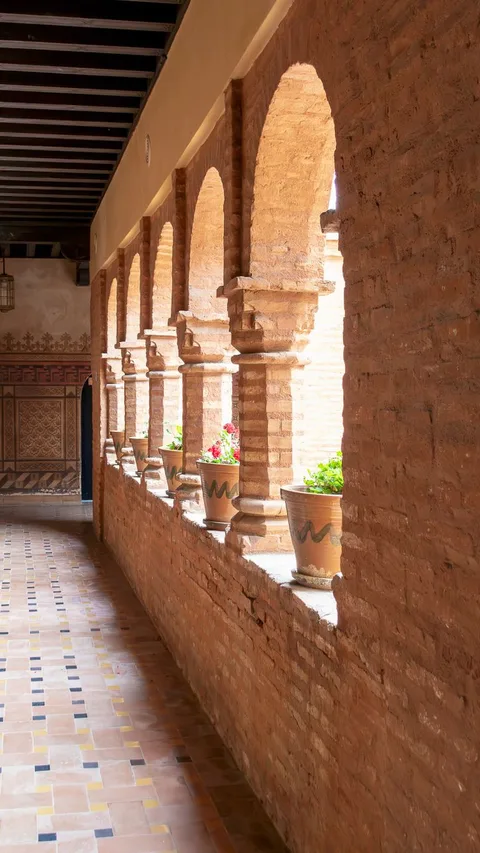
When the state transformed the complex into a four-star Parador in the 1990s, architects preserved the architectural soul of the monastery while introducing modern comforts. The cloister has been enclosed with glass, turning the ambulatory into an airy lounge adorned with the Serie Malevich paintings by Cuenca artist Julián Casado. The former monastic dining hall serves as the hotel restaurant beneath soaring beamed ceilings, while the deconsecrated Gothic chapel now houses the hotel cafeteria and bar. To understand how monastic layouts differ from fortress properties, read our overview of castles, palaces, and monasteries across the Parador network.
Room Guide: Securing the Hanging Houses View
The Parador de Cuenca houses 63 guest rooms spread across three floors of the historic cloister and monastery wings. Because the building wraps around a central courtyard and abuts the southern slope of the gorge, room views and layouts vary considerably. Booking blindly often leads to disappointment if your heart is set on sunset panoramas of the gorge.
| Room Category | Typical Floor | Window Orientation | Direct Casas Colgadas View? | Noise & Ambience |
|---|---|---|---|---|
| Standard Double (Interior) | 1st & 2nd | Glazed cloister courtyard | No | Whisper-quiet; soft filtered daylight |
| Standard Double (Hillside) | Ground & 1st | South gardens / parking approach | No | Quiet; views of pine groves and cliffs |
| Superior Double (Gorge View) | 2nd & 3rd | North face overlooking Hoz del Huécar | Yes (unobstructed) | Dramatic; sound of wind through gorge |
| Junior Suite / Suite | Upper corners | Dual aspect (gorge and valley) | Yes (panoramic) | Spacious historic quarters with sitting salon |
To guarantee a direct view of the illuminated Casas Colgadas at night, you must explicitly reserve a Superior Double with Gorge View (Habitación Superior con vistas a la Hoz). These rooms feature tall wooden-shuttered casement windows looking directly across the void to the wooden cantilevered balconies of the 14th-century houses. If you book a Standard Room, you will likely face either the interior glassed-in cloister or the back hillside. For tips on navigating room classifications across heritage properties, consult our guide on booking historic wings versus modern hotel annexes.
When checking in, members of the Amigos de Paradores loyalty program can request upper-floor rooms (levels 2 and 3) facing north. Rooms ending in even numbers along the northern wing provide the straightest optical line to both the bridge and the hanging facades. Corner suites on the upper level provide a dramatic dual-aspect perspective, sweeping from the lower valley to the Plaza Mayor cliffs above.
Crossing the Puente de San Pablo: Practical Realities
Stepping out of the Parador's courtyard places you directly at the eastern abutment of the puente de san pablo cuenca. Originally constructed in stone between 1533 and 1589 under Canon del Pozo, the original multi-arched bridge deteriorated over centuries and collapsed in the late 19th century. The current structure, engineered by José María Sánchez Arana and inaugurated in April 1903, is a striking industrial footbridge forged from rust-red structural iron and straight wooden decking planks.
- Dimensions: The bridge spans 100 meters in length and rises up to 40 meters above the rocky bed of the Huécar stream.
- Tread Surface: Heavy timber railway-style wooden ties with narrow lateral gaps. High heels and thin wheeled luggage will catch; wear sturdy rubber-soled footwear.
- Wind and Motion: In autumn and winter, mountain gusts funnel through the gorge. The iron lattice is engineered to flex slightly under foot and wind loads; this subtle vibration is normal but can heighten anxiety for those prone to vertigo.
- Parapet Height: Sturdy waist-high metal cross-braced railings run the entire 100-meter span, providing secure physical protection without obstructing photo angles.
- Night Illumination: The walkway is subtly lit, but crossing around midnight to see the medieval quarter bathed in golden floodlights requires careful foot placement on the wooden boards.
If someone in your party experiences disabling acrophobia or cannot cross open-span bridges, do not panic: local taxis can pick you up from the Parador's front turnaround and drive along Calle San Pedro and the outer gorge road to reach the Plaza Mayor in roughly 8 minutes (typical daytime fare: €7 to €9).
Three Curated Walking Routes from the Parador
The Parador serves as an unmatched trailhead. Once you cross the bridge, the historic center of Cuenca opens before you like an amphitheater of stone.
1. The Classic Ascent to Plaza Mayor & The Cathedral (450 meters, 15 minutes)
After crossing the footbridge to the old town side, turn immediately right beneath the stone foundations of the Casas Colgadas. The cobbled ramp (Pasaje de San Pablo) ascends steeply past the entrance to the Museo de Arte Abstracto Español. Continue upward along Calle de San Pedro. You will emerge straight into the vibrant, pastel-fronted Plaza Mayor, dominated by the Norman-Gothic facade of the Cathedral of Santa María y San Julián.
Local advice: This path has an average incline of 12% on uneven river cobblestones (canto rodado). Walk slowly and take advantage of resting benches along the stone lookouts overlooking the Parador.
2. Clifftop Ridge Walk to the Barrio del Castillo (1.4 km, 35 minutes)
From Plaza Mayor, continue past the town hall arches uphill along Calle San Pedro until you reach the narrowest neck of the limestone ridge at the Arch of Bezudo and the ruins of the Moorish fortress (El Castillo). From here, the ridge drops sheerly on both sides: the Huécar gorge to your right and the Júcar river canyon to your left. Stop at Mirador del Rey for an aerial panorama looking straight down onto the Parador's tile roofs and the red bridge far below. Return down through the quiet stairways of the San Martín quarter, famous for its rear "skyscrapers" (rascacielos) built downward into the cliffside.
3. The Peaceful Lower Gorge Loop (Paseo del Huécar, 2.2 km, 45 minutes)
For a level walk that avoids steep climbs, take the pedestrian path winding down from the Parador parking approach toward the floor of the Hoz del Huécar. The shaded lane follows the trickling Huécar stream under towering poplars and weeping willows. Looking up from directly below the bridge offers an astonishing perspective on the height of the iron piers and the verticality of the convent's foundation walls. Follow the path westward toward the modern town bridge (Puente de la Trinidad) before returning via the gentle paved footway.
Monastic Dining & The Chapel Cafeteria
Cuenca's gastronomy reflects its rugged Serranía landscape, characterized by robust game, sheep's milk cheeses, and aromatic herbs. The Parador's main restaurant, situated in the former monastery refectory, prepares traditional Manchego dishes with contemporary finesse. Key culinary specialties include:
- Morteruelo Conquense: A warm, savory pâté of hare, partridge, pork liver, breadcrumbs, and spices, served with toasted sourdough bread.
- Ajoarriero: A creamy whipped emulsion of salt cod, potatoes, garlic, and extra virgin olive oil.
- Zarajos de Cuenca: Tender milk-fed lamb intestines marinated with garlic and white wine, wrapped around vine shoots and grilled crisp.
- Alajú: A traditional Moorish sweet made of toasted almonds, breadcrumbs, honey, and orange zest sandwiched between delicate communion wafers.
Before dinner, order a glass of local D.O. Ribera del Júcar red wine in the former chapel. Drinking an evening aperitif beneath vaulted stone rib arches and baroque cornices is among the most evocative social experiences in any Spanish monastery hotel. Learn more about seasonal tasting menus across the network in our detailed guide to dining at Paradores.
Mobility, Access & The Historic Terrain
Staying at an authentic 16th-century monastery perched over a gorge presents specific physical considerations. Parador de Cuenca features step-free ramped access from the parking area into the main lobby, modern elevators serving all guest room floors, and two fully adapted accessible guest rooms. The interior glass-enclosed cloister and dining refectory are fully wheelchair navigable. However, travelers with limited physical mobility should note several spatial factors:
- Puente de San Pablo: While the bridge itself is level, its wooden slatted surface creates mild vibrations, and the gap between boards can rattle manual wheelchairs or rollators.
- Old Town Incline: Immediately upon exiting the town side of the bridge, visitors face steep cobblestone ramps and steps. Exploring Cuenca's upper quarter on foot requires significant stamina or motorized assistance.
- Pool Access: The cliffside outdoor swimming pool (open seasonally from mid-June to mid-September) sits on an open terrace with breathtaking canyon views, accessed via a gentle paved path and elevator from the lower cloister.
For extensive advice on traveling throughout Spain's historic properties with mobility equipment, read our complete guide to accessibility and wheelchair travel in Paradores.
Getting There & Parking Logistics
Cuenca is exceptionally well-connected thanks to Spain's high-speed rail corridor (AVE/Avant), which connects Madrid-Atocha or Valencia-Joaquín Sorolla to Cuenca-Fernando Zóbel station in under 60 minutes. From the high-speed station (located 6 km outside the historic core), take urban bus line 1 directly to the town center, or take an official taxi straight to the Parador front gates (approximately €12 to €15, 12 minutes).
If driving, avoid entering the old town's narrow pedestrian lanes. Follow road signs toward the Parador via Calle Hoz del Huécar and the Subida a San Pablo. The hotel offers an on-site surface parking lot with EV charging points for hotel guests (approx. €18/day; complimentary for Amigos de Paradores Titular members on qualifying stays). Because the Parador is located on the outer edge of the gorge, you completely bypass the low-emission and restricted traffic zones (ZTL) of the medieval upper quarter.
Частые вопросы
Which specific rooms at Parador de Cuenca have the best view of the Casas Colgadas?
Book a Superior Double with Gorge View (Habitación Superior con vistas a la Hoz) on the 2nd or 3rd floor. Northern wing rooms ending in even numbers offer direct, unobstructed vistas across the gorge toward the Casas Colgadas and the iron footbridge.
Is the Puente de San Pablo safe to cross if I suffer from vertigo?
The bridge is structurally rigid and protected by waist-high iron railings, but you can see through the lateral lattice down into the 40-meter canyon, and the wooden boards flex slightly in high winds. If acrophobia prevents you from crossing, a local taxi can take you from the Parador around the gorge into the Plaza Mayor in 8 minutes for roughly €8.
Can I drive directly to the Parador de Cuenca without getting a fine?
Yes. The Parador sits outside the restricted traffic zone of Cuenca's upper town. Access it from the southern ring road via Subida a San Pablo directly to the hotel gates, where guest parking and EV chargers are available.
How long does it take to walk from the Parador to Cuenca Cathedral?
The walk takes approximately 12 to 15 minutes (about 450 meters). You cross the 100-meter footbridge and then ascend a steep, historic cobblestone path leading into the Plaza Mayor right in front of the cathedral.